Every long-running saga needs a proper goodbye. The Metal Fight era got its final chapters under the Zero-G banner, and they didn't look like a farewell at all. From the outside, Beyblade: Shogun Steel — the Western name for Japan's Metal Fight Beyblade Zero-G — seemed like just another wave. In hindsight, it was the closing of a door, the last time the old metal formula would spin before the Burst reboot swept everything aside in 2015.
A new hero, seven years later
The biggest shift was on the screen. After years following Gingka Hagane, the anime handed the launcher to a fresh face: Zyro Kurogane, a young blader driven by a single dream — to grow strong enough to one day face his idol, Gingka himself. Where the main Metal Saga had been a story of rising champions and world-ending threats, Zero-G let itself breathe. It was smaller, more personal, a road trip through a generation of new rivals and friends. The old guard still lingered in the margins, but the spotlight now belonged to the kids who had grown up watching them.
Samurai Fusion Wheels and the rise of Synchromes
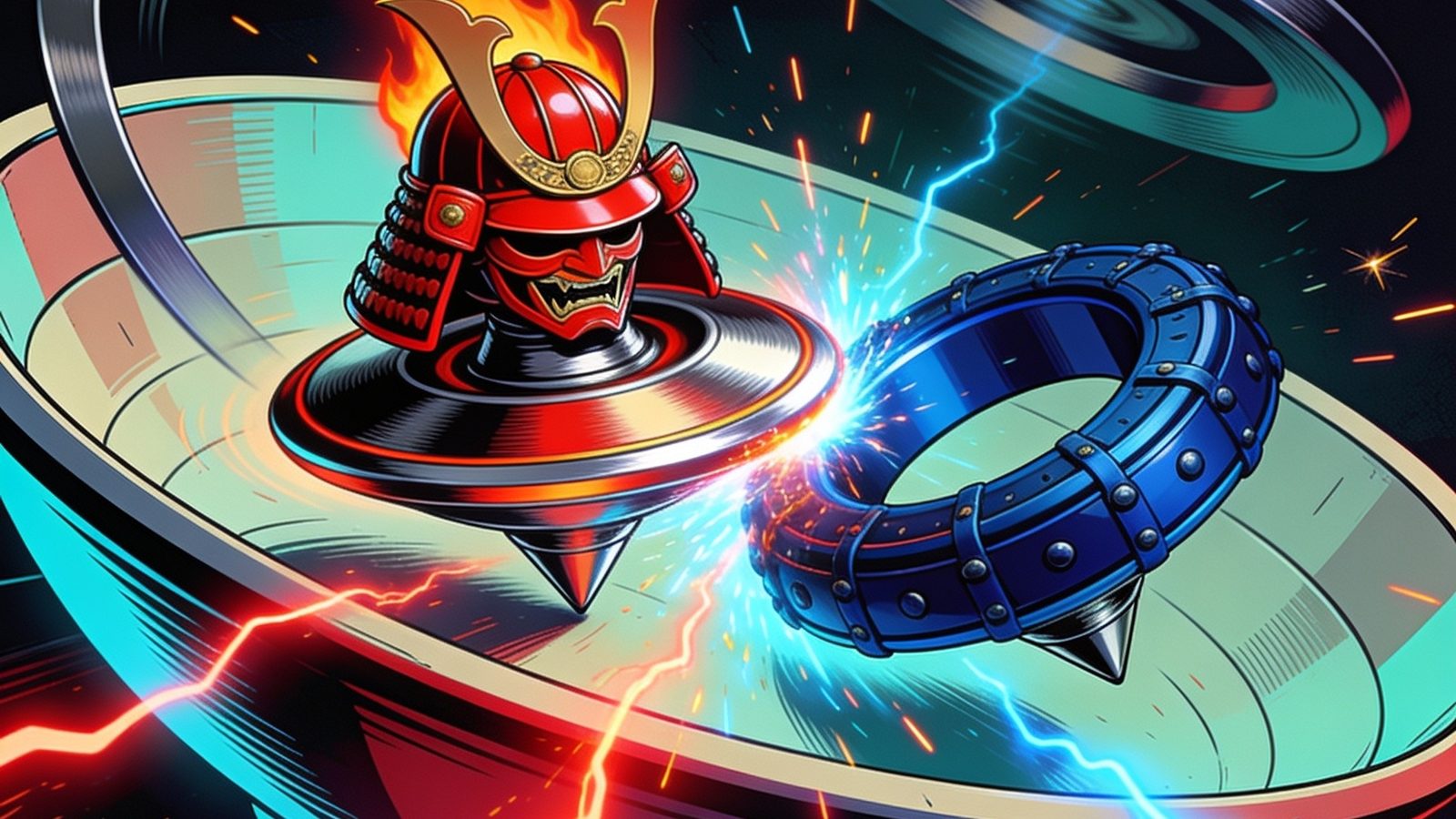
The toys matched that spirit. Takara Tomy traded the constellation motif of earlier Metal Fight releases for a gallery of mythical creatures, and the designs went bolder and more detailed than anything the 4D system had tried. Leading the charge was Samurai Ifrit, Zyro's starter — an Attack-type built around a heavy Chrome Wheel ringed with a removable "Samurai" Element Wheel. That little detail mattered, because it set up the era's real gimmick: Synchrome.
Synchrome let you pull the Element Wheel off one bey and lock a second Warrior Wheel in its place, fusing two Chrome Wheels into one hulking double ring. Done right it nearly doubled the total weight — put Ifrit together with Salamander and you were slinging over sixty grams of metal around a stadium. It was the heaviest combination the Metal Saga ever produced, so potent that tournament organizers would eventually ban Synchromes from some legacy formats. On the shelf it was pure customizer fuel; in the anime, Synchrome became the running plot, with teammates fusing their beys into Water, Air, Earth, and Fire combinations to save the day.
A stage that tilted and swayed
Zero-G earned its name through the stadiums. The new bey arenas were shallow, bowl-shaped plates that physically tilted and swayed as the beys battled across them, sending tops dashing and pinwheeling in a way the flat, fixed stadiums never could. On the ground it read as a gimmick — a fun wobble — but it quietly demanded a whole new set of techniques from players who had mastered the old board game.
The metal sun sets
Looking back, Shogun Steel holds a strange, tender place. It wasn't the blockbuster climax of the Metal Saga; it was the afterparty. The Zero-G wave ran out over 2012 and 2013, and then the line went quiet. When Burst arrived in 2015, it broke the metal mold entirely, and the Metal Fight name slipped into memory. But for those of us who were there, Zero-G was the last time the old formula got to try something genuinely new — a final, sunny lap before the lights went down on the era that made Beyblade what it was.