
A Heavier Spin
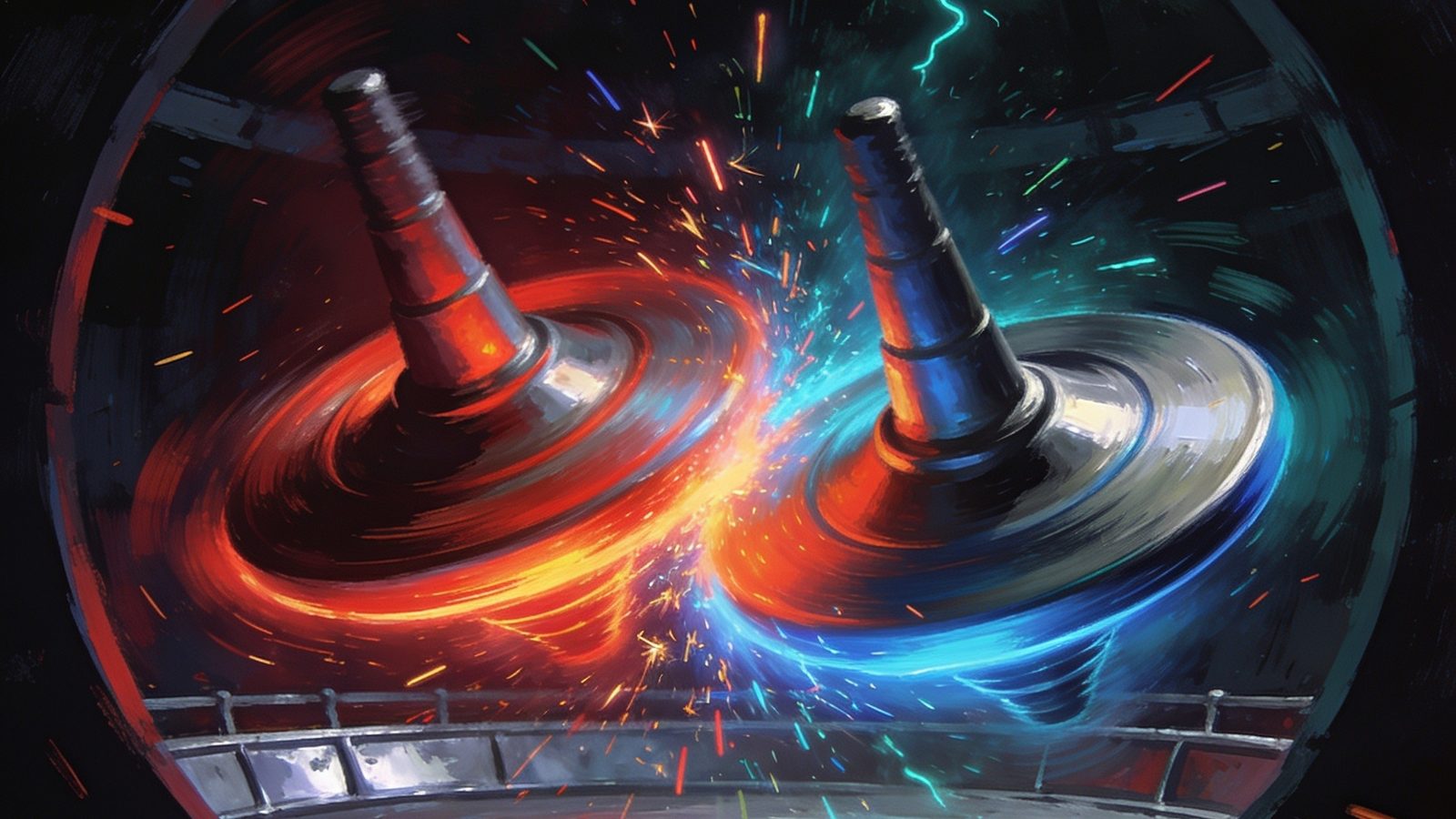
Every Beyblade fan has a turning point, a single era they keep going back to. For a huge part of the community, that era is the Metal Saga — the stretch of the game that ran from roughly 2008 to 2012 under the name Metal Fight Beyblade. It followed the original plastic era and changed the formula at the most basic level: where older beys spun on molded plastic, these were built around real metal. It felt heavier in the hand, fiercer in the stadium, and a lot more serious on the shelf. This is the archive retrospective for the years that gave the game its steel.
The Metal Build
The Metal Saga's identity lived in how a bey came together. Every Metal Fight blade assembled from a stack of parts, and every part did a job. The metal Fusion Wheel sat at the center, cast from actual metal and shaped for Attack, Defense, or Stamina — it was the engine, and it was the part that made these beys hit harder than anything before. Around it clipped the Energy Ring, the clear layer that carried a bey's animal motif and identity. Below that went the Spin Track, which set the height (the number told you the height in millimeters, so a 145 track stood 14.5 mm tall) and carried the special mechanics, and finally the Performance Tip at the bottom, the contact point that decided whether the bey wheeled, glided, or held its ground. Four parts, one blade, and an almost endless pile of possible builds.
The Japanese Launch
The era opened in Japan in 2008 when Takara Tomy brought the toy line back after a few years off the market. The first Metal Fight releases hit shelves on August 9 of that year, and the relaunch was a deliberate reset — new system, new beys, and a fresh generation of bladers to win over. Where the old Attack Rings were plastic, the new Fusion Wheels were metal, which was the whole point: contact points you could actually hear clang.
The Western Push
Japan got it first, but the West got it big. Hasbro picked up the format and rereleased it under the Beyblade: Metal Fusion name, arriving in North America in 2010 and spreading from there. That Western branding opened the era to a much wider audience, and it's why so many fans I grew up with remember the same stadiums, the same beys, and the same rivalries.
The Anime
The saga got a proper home on screen too. The Metal Fight anime ran from 2009 into 2012 across four seasons — Metal Fusion, Metal Masters, Metal Fury, and a final Zero-G run (Shogun Steel in the West) — following a new cast of bladers as the damage and the drama scaled up with each tournament. It turned a weekend toy into a weekly appointment.
Why It Still Resonates
The Metal era matters because it was the collector's age. Those metal Fusion Wheels gave each bey a weight and a finish that later, lighter systems never quite matched — hold a Metal Fight bey and you feel why grown fans still hunt original releases. Today, the era endures in quiet ways: the parts lists, the build discussions, the "remember this one?" posts. It was heavy, it was loud, and it's still the standard a lot of us measure every Beyblade era against. Long may it spin.