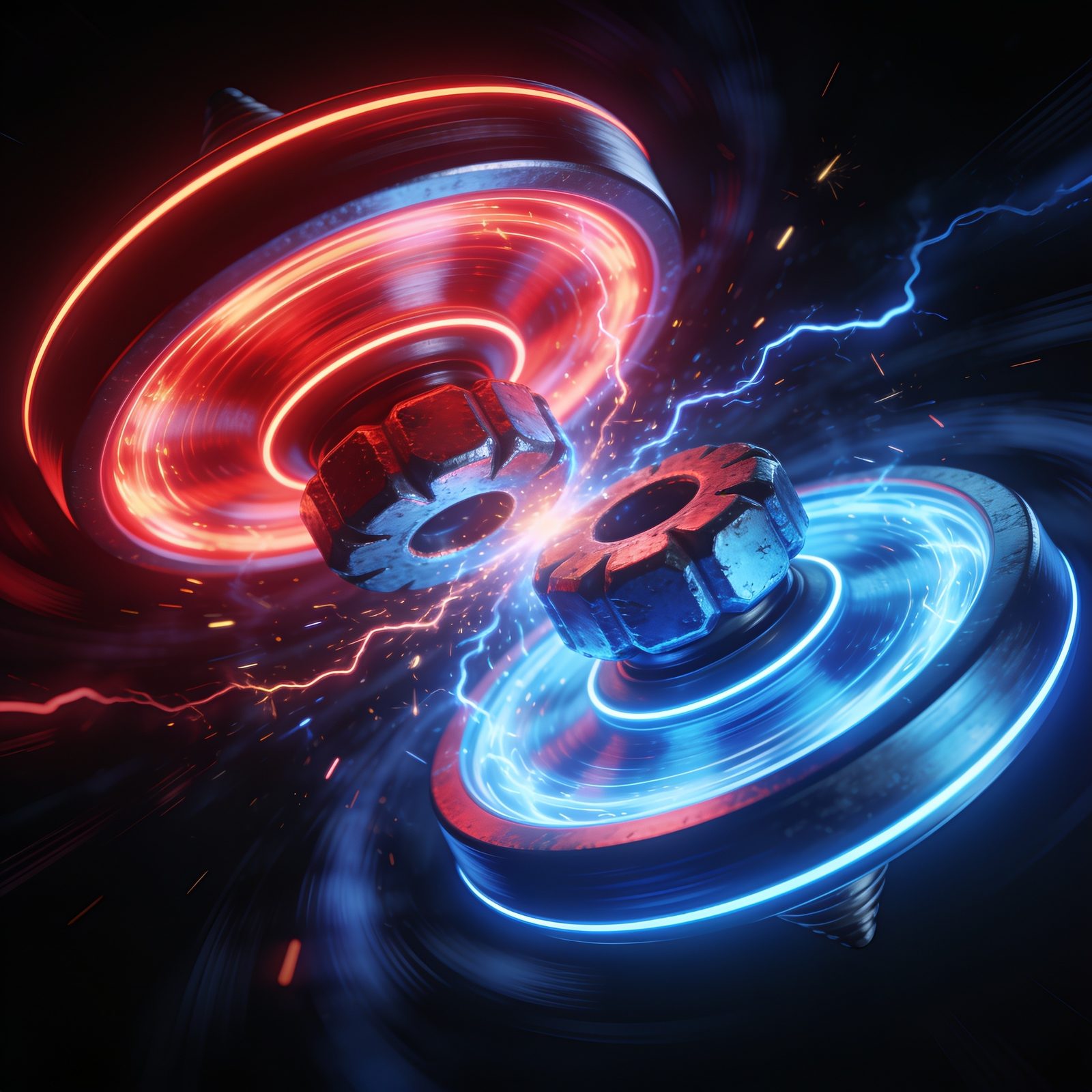
There is a moment every long-time Blader remembers: holding a Hard Metal System Beyblade for the first time. It was smaller than anything that came before it, little like the chunky plastic tops of 1999. It felt denser. Heavier. When two of them clashed, the ring sang a metallic ring that no all-plastic top could produce. For veterans of the original generation, it was the sound of Beyblade growing up.
Why this era mattered
By the early 2000s, the original Plastic Generation was showing its age. The tops that had debuted in 1999 — and made the anime a global hit from January 2001 — had been pushed through a Spin Gear system, then an Engine Gear system, and the formula was wearing thin. Players wanted real innovation, not another tweak. Takara's answer, arriving in 2003, was a clean break: the Hard Metal System. It deliberately threw away compatibility with everything before it, a bold move that made every old top obsolete overnight and set the stage for Beyblade's closing chapter.
What made HMS different
The trick was metal. Where earlier tops were essentially all plastic, HMS Beyblades bolted metal weight onto the attack ring, adding spin weight and stamina while shrinking the whole top to about 75% of its predecessor's size. The weight stayed, the footprint went down, and the result was dramatically higher rotation speed alongside real improvements to attack and defense power. The metallic clash became the system's signature appeal. New launchers could also spin beys in both directions, widening how players approached each match. It was, in short, the fastest, hardest, most effective generation the line had seen — and long-term players knew it immediately.
The G-Revolution connection
This was never just a toyline upgrade. Hard Metal tops debuted in the final season of the anime, Beyblade G-Revolution, and the timing was perfect. Characters traded their old blades for the new MS-class tops midway through the story, entering the BEGA arc — the Beyblade Entertainment Global Association's takeover of the tournament scene — where the stakes rose alongside the metal. The series finale that followed turned out to be the real goodbye to the Original Series, and HMS was the weapon of choice for its last battles.
Why collectors still chase them
HMS remains one of the most revered systems in Beyblade history. Around December 2003, Takara-Tomy shifted to a new "MA-" product code followed by a two-digit serial, and the line ran on into 2005 before the Original Series closed out. Those metal-framed tops, with their signature heft and that unmistakable sound, are the ones collectors still search for decades later — the crown jewel of the Plastic Generation's last days.
What came next
HMS proved the idea that would define the next generation: that metal made Beyblade better. When the Metal Saga (Metal Fusion and its sequels, starting in 2009) arrived, it carried that lesson forward, folding the attack ring and metal weight into a single heavy metal wheel. Every metallic clash in later generations echoes the moment HMS first put steel in a top — and reminded us why we loved Beyblade in the first place.